
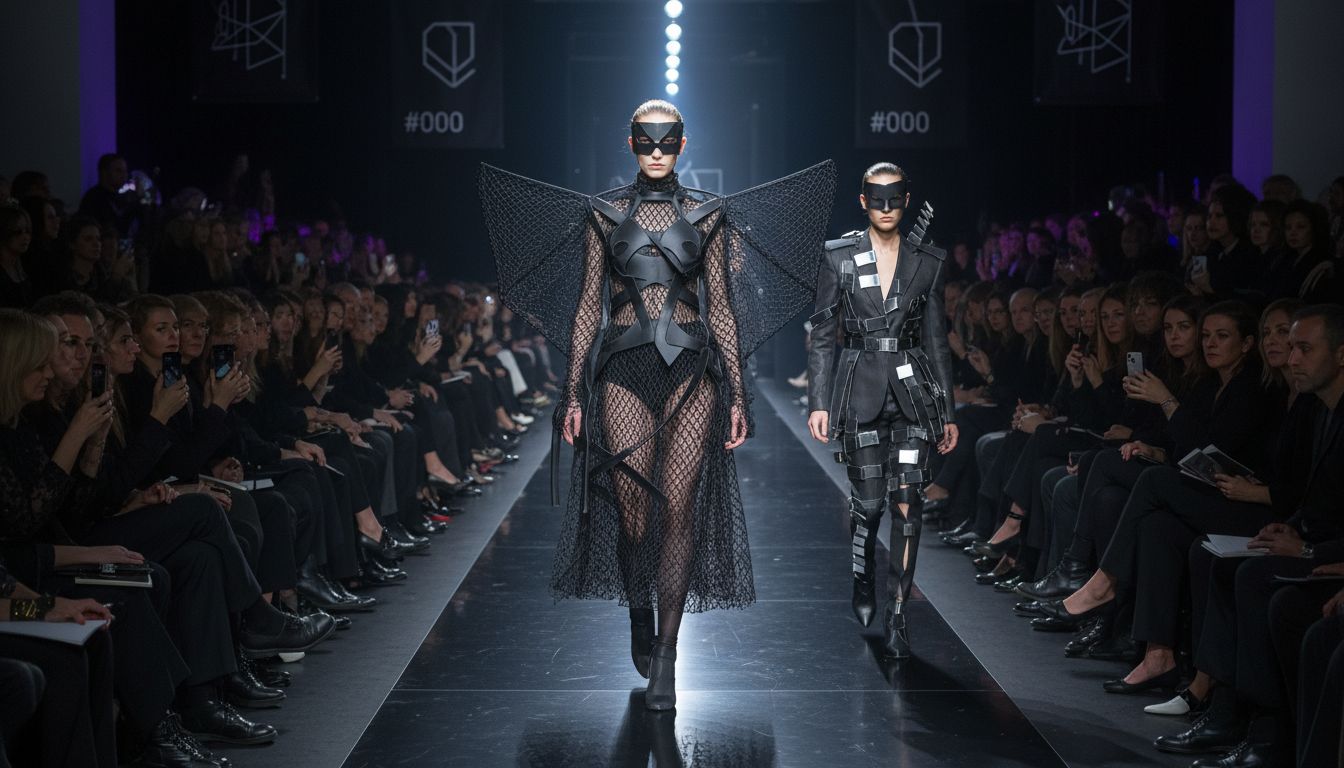


By Gemma Deeks, Coveti Fashion Editor. Updated 13 October 2026.
Avant-garde fashion is clothing that challenges what clothes are supposed to look like. It plays with shape, proportion, material and meaning, and it often looks closer to art than to the latest trend. This guide covers where the term comes from, how to recognise avant-garde design, the moments that shaped it, and how to wear it without feeling like you are in costume.
What does avant-garde mean?
Avant-garde is French for “advance guard”, the troops who went ahead of an army. In the nineteenth century the term moved into the arts to describe painters, writers and composers who worked ahead of their time. In fashion it means the same thing: designers who push past accepted ideas of beauty and wearability, and whose ideas often become mainstream years later.
How to recognise avant-garde fashion
- Unexpected shapes. Shoulders that sit square, padding in unusual places, volume that ignores the natural line of the body.
- Visible construction. Raw edges, exposed seams and garments shown inside out. This is the deconstruction approach.
- A concept first. Many collections start from a single idea, such as a garment repeated, layered, inverted and multiplied, and build every piece around it.
- Unusual materials. Technical fabrics, sculpted metal and 3D printing alongside traditional cloth.
- Surreal detail. Body parts as jewellery, trompe l’oeil, everyday objects turned into accessories.
A short history of avant-garde fashion
1930s, surrealism. Elsa Schiaparelli worked with Salvador Dalí and other surrealist artists, producing pieces such as the 1937 Lobster Dress. Her house still uses surreal motifs today.
1981, the Japanese designers in Paris. Rei Kawakubo of Comme des Garçons and Yohji Yamamoto first showed in Paris in 1981. Their loose, mostly black, deliberately imperfect clothes challenged the fitted glamour of the period.
Late 1980s and 1990s, deconstruction. Martin Margiela, who founded his house in 1988, took garments apart and showed how they were made. Alexander McQueen, founded in 1992, paired Savile Row tailoring with a dark, theatrical imagination.
Today. Designers such as Iris van Herpen use technology and science in couture, while houses like Viktor & Rolf and Schiaparelli bring conceptual and surreal ideas into clothes you can buy.
For the houses whose avant-garde pieces you can buy now, see our edit of avant-garde fashion designers you can buy online.
Avant-garde vs traditional luxury fashion
| Avant-garde | Traditional luxury | |
|---|---|---|
| Starting point | An idea | A customer and a season |
| Shape | Challenges the body’s line | Flatters the body’s line |
| Construction | Often visible | Hidden |
| Signature | The concept | The logo and the craft |
The two overlap more than they used to. Many luxury houses now run an experimental line alongside their classics.
Avant-garde outfits: how to wear it
The trick is one statement piece at a time, with everything else kept plain. Five looks built from pieces in stock at Coveti:
- Surreal jewellery with a black knit. Schiaparelli Visage Earrings in Antique Gold with a fine black jumper and tailored trousers. The earrings do all the talking.
- Conceptual shirting for the office. The Viktor & Rolf Multi-Layered Collar Shirt with straight black trousers and loafers.
- Proportion play on the weekend. The Viktor & Rolf Couture Square Shoulder Denim Jacket over a white tee and straight jeans.
- Tailoring for evening. Alexander McQueen Iridescent Bumster Trousers with a simple bodysuit and the Sculpted Shoulder Leather Jacket.
- Corsetry over a shirt. The Vivienne Westwood Puppy Corset over a crisp white shirt, with a full skirt for dinner and jeans for the day.
To start smaller, pin a crystal bow, such as the Dice Kayek Big Ribbon Brooch, to a plain coat, and add the Alaïa Wool Cinched Jumper for sculpted shape in a knit.
Frequently asked questions
What is avant-garde fashion?
Avant-garde fashion is clothing that challenges accepted ideas of shape, proportion, material and wearability. The term comes from the French for “advance guard” and describes designers working ahead of their time.
What are the main characteristics of avant-garde style?
Unexpected shapes, visible construction, a strong concept behind the collection, unusual materials and surreal detail.
Who are famous avant-garde designers?
Elsa Schiaparelli, Rei Kawakubo, Yohji Yamamoto, Martin Margiela, Alexander McQueen, Viktor & Rolf and Iris van Herpen are among the best known.
How do you wear avant-garde fashion every day?
Wear one statement piece at a time, for example a sculptural earring with a plain black knit, and keep the rest of the outfit simple.

Related Posts
Zimmermann Sunglasses: Every Resort 2027 Frame Compared
Zimmermann sunglasses come in six frames in the newest drop: the Mirel Round, Mirel Oversize, Goldie Oval, Ellis Cateye, Ellis Navigator and Ellis Hexagon. Every pair is made in Italy, sold in one size with lens widths from 48mm to 60mm, and arrives with a Zimmermann case, dust bag and storage box. Lens categories run from 1 for a light tint up to 3 for strong sun, and the whole edit sits in Coveti's designer sunglasses category.
What Is a Toi et Moi Ring? Meaning, Sizing and Styling
A toi et moi ring is a ring set with two stones side by side, and its name is French for "you and me", so each stone stands for one person. The two stones can match, though they often differ in shape and colour, and they sit together on a single band. The Zimmermann Bloom version in the designer rings edit sets two black stones inside a gold floral form.
Sunglasses for Face Shape: How to Pick Frames That Fit
The best sunglasses for your face shape are the ones that contrast with it: angular cat eye, hexagon and navigator frames balance a round face, while round and oval frames soften a square jaw. Oval faces can wear almost any shape, and the frame should be roughly as wide as the widest part of your face. Every frame in the new Zimmermann drop maps neatly onto one of these rules, and you can try them all in the designer sunglasses edit.
How to Wear Flare Pants: Tops, Shoes and Hem Length Guide
To wear flare pants, balance the wide hem with a fitted top half: a cropped blouse, a tucked shirt, a slim knit. Then hem them for the shoes you will actually wear, so the flare skims the top of the foot and sits just off the floor. A heel lengthens the leg and a flat makes the look casual; the Zimmermann collection and the wider designer pants edit carry both fluid jersey and rigid denim versions.
How to Wear Drop Earrings: Hair, Necklines and Fit
To wear drop earrings, match the length of the drop to your neckline and your hair: open necklines and hair worn up suit longer drops, while high necks and loose hair suit shorter, slimmer ones. Keep the rest of your jewellery quieter so the movement of the earring does the talking. The Zimmermann Bloom and Plume drops in the designer earrings edit are good examples of both lengths.
How to Wear Ballet Flats: Outfits, Fit and Styling Rules
To wear ballet flats well, match the shoe to the hem: cropped trousers, ankle length jeans and midi skirts show the low vamp of a ballerina best, while a long flare hides it. Keep one element of the outfit structured, like a tailored jacket, a crisp shirt, a defined waist, so the flat reads polished rather than sleepy. Start with a rounded toe in black, gold and soft neutrals from the Zimmermann designer edit and the wider designer flats collection, and build from there.
How to Wear a Lace Skirt: Tops, Shoes and What Goes Under
To wear a lace skirt, pair it with a plain, close fitting top in a solid colour, wear a slip underneath when the lace is unlined, and choose shoes that match the mood: flats and sneakers by day, slim heeled sandals at night. The lace is the statement, so let everything around it stay smooth and simple. The Zimmermann Resort 2027 collection is full of examples across its designer midi skirts.
How to Wear a Cuff Bracelet: Fit, Wrist and Stacking
To wear a cuff bracelet, slide it on sideways through the narrow part of your wrist and let it rest just above the wrist bone, snug enough not to spin but loose enough to move. Wear it on the wrist without your watch for a clean look, and pair it with short sleeves, bare arms and sheer fabrics that let it show. A sculptural gold cuff like the Zimmermann Plume in the designer bracelets edit is strong enough to wear on its own.
How to Tie a Silk Neck Scarf: 8 Knots That Stay Put
To tie a silk neck scarf, fold it lengthwise into a narrow band, drape it around your neck with one end a little longer, then finish with a knot that suits your neckline: a side knot for an open collar, a bow for a blouse, a loop knot for a coat. A long, skinny silk scarf is the easiest to tie because the extra length lets you wrap twice and double knot, which is what keeps silk in place. The Zimmermann printed silk neck scarf, at 180 by 18 cm, is a good example, and you will find more shapes in the designer scarves edit.
How to Style Strappy Heels: Outfits, Hems and Fit
To style strappy heels, let the straps show: pair them with hems that stop above the ankle bone, and hem full length pieces so they skim the floor with only the toe on view. Black strappy sandals work with nearly every colour and fabric, while a red pair becomes the focal point of a neutral outfit. The Zimmermann pairs in the designer sandals edit sit on an 85mm heel, a height that carries you from a long lunch into dinner.
How to Style Red Heels: Colours, Outfits and Occasions
To style red heels, treat them as the one accent in an outfit built from neutrals such as chocolate, cream, navy, olive and denim, and keep other red pieces to a minimum. A red heel works with jeans, tailoring and dresses alike, as long as everything else stays quieter. The Zimmermann Resort 2027 collection shows how in its edit of designer sandals.
How to Style Bermuda Shorts: Shoes, Length and Outfit Rules
To style Bermuda shorts, treat them like tailored trousers that happen to stop just above the knee: pair them with a fitted top, a jacket with structure and a shoe that shows some foot, such as a ballet flat, a slim sandal, a loafer. Keep the waist high and the top half neat, and the length reads deliberate rather than casual. The Zimmermann ready to wear edit and our wider designer shorts collection are the places to start.